Nursery · Baby textiles
Choosing Organic Cotton for a Gentler Nursery
A nursery textile can look wonderfully soft on the shelf, but everyday comfort depends on more than its fiber label. Learn how certification, knit structure, closures, fit, and care instructions can help caregivers make informed choices—and why product-specific safe-sleep guidance always comes first.
Start with the whole textile, not just the label
When a baby is on the way, even a simple textile decision can feel surprisingly significant. A soft-looking knit, a reassuring natural-fiber label, or a familiar nursery color may catch a caregiver’s attention, but those details tell only part of the story. What matters in daily use is the complete item: what it is made from, how it is constructed, how it fits, how it fastens, and how it should be cleaned.
Organic cotton is a popular choice for baby textiles because it can feel soft and comfortable against the skin. Yet the word “organic” does not automatically tell you whether a fabric is breathable, whether the seams will hold up, or whether a sleep garment is suitable for a particular baby or room temperature. Those questions deserve their own careful look.
A helpful approach is to treat the product label as a starting point rather than a final verdict. Check the fiber content and any certification claim, then consider the fabric structure and practical design. Finally, read the care instructions and the manufacturer’s directions for intended use. Each detail answers a different question; together, they create a more useful picture of what an item can offer.
What organic cotton can—and cannot—tell you
Cotton is a plant-based fiber used in everything from smooth woven cloth to textured sweaters and open-knit baby garments. Organic cotton refers to the way cotton is grown under specified agricultural standards. A finished item may also be processed, dyed, knitted, sewn, and finished in several stages, so a fiber claim alone does not describe every part of its production.
For nursery textiles, natural fibers often appeal to caregivers because they can provide a comfortable handfeel and a familiar, breathable fabric option. But fiber is only one influence on comfort. The yarn’s thickness, the density of the knit, the garment’s cut, the room environment, and the baby’s individual needs all play a role. Two items made from 100% cotton can feel and perform differently because their construction is not the same.
It is also useful to keep “natural,” “organic,” and “certified” distinct. “Natural” can be a broad description; it does not necessarily provide detailed information about agricultural practices or processing. “Organic” points to a production claim, while a credible certification can offer a defined standard and a means of verification. The precise scope depends on the certification and the product claim, so check the wording rather than assuming every label covers every step.
None of these terms should be treated as a medical guarantee. Organic cotton does not promise that a baby will never experience irritation or an allergic response. If a baby has a skin condition, unusual sensitivity, or persistent symptoms, a pediatric health professional can offer individual guidance. For routine selection, a smooth-feeling fabric, clear care instructions, and a well-made construction are sensible considerations.
Understanding GOTS certification
GOTS, short for the Global Organic Textile Standard, is a certification system for textiles made with organic fibers. It addresses more than the fiber itself: the standard includes environmental and social criteria for processing and manufacturing, with requirements that apply across covered stages of the supply chain. A GOTS claim can therefore provide a more structured point of reference than an unqualified statement about organic material.
When reviewing a product, look for clear language about what is certified. Is the finished textile described as GOTS certified, or does the page make a narrower claim about one material or component? Where available, note the certification or licensing details and check whether they refer to the specific product you are considering. Brand descriptions may summarize certification, but the exact scope should be understood from the claim itself and the certifier’s published requirements.
Certification does not replace practical inspection. It does not tell you whether a sleeping garment will fit properly, whether its buttons are secure, or whether a particular knit will feel comfortable to your child. Nor does it replace safe-sleep recommendations. Think of certification as one useful part of a broader decision—not a substitute for checking construction, sizing, intended use, and care.
Some nursery items describe more than one standard. For example, a product listing may identify organic-textile certification and separate fair-trade factory certification. These claims address different aspects of production, so it helps to read each one on its own terms instead of treating several labels as interchangeable.
Why knit structure changes the feel
“Knit cotton” can describe fabrics with very different textures and levels of openness. A fine, close knit may feel smooth and substantial, while a textured stitch can create a more pronounced surface. Ribbing, often used at edges or openings, has stretch and can help an item sit neatly. A looser structure may feel airy, but no single knit is automatically right for every season or every baby.
Consider where the textile touches the body and how it moves. Inside seams, necklines, arm openings, and cuffs can affect comfort as much as the main fabric. For a wearable nursery item, the fit should allow comfortable movement without leaving the garment so loose that it fails to stay in its intended position. Check the maker’s size guidance and measure according to its instructions if sizing is uncertain.
Fabric weight and warmth also deserve attention. A thick knit can feel cozy to an adult’s hand without necessarily being the most appropriate layer for a warm room. A lightweight fabric can still provide coverage, while room temperature and the baby’s clothing layers influence overall comfort. Avoid judging warmth from fiber content alone; seek the product’s specific guidance and follow advice from recognized child-safety authorities and your child’s health professional when you need individualized help.
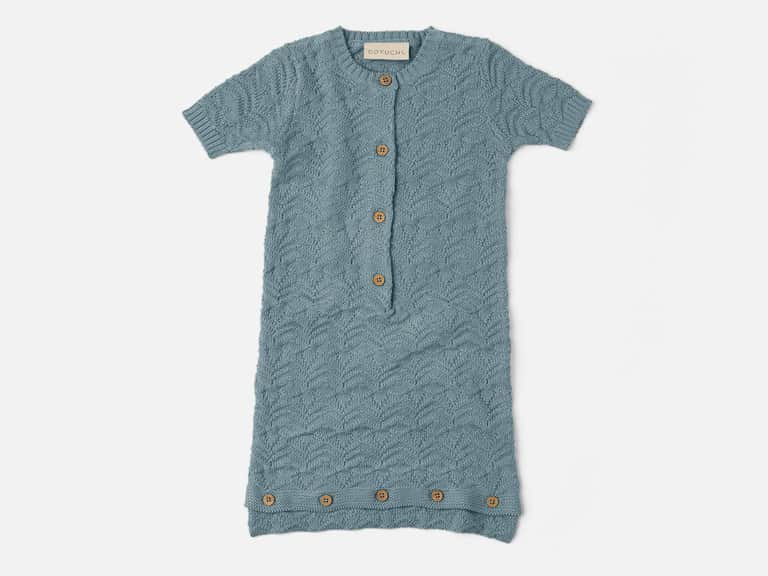
Texture can be appealing, especially when a design includes a novelty stitch or rib-knit details. Still, decorative features should be securely constructed and should not interfere with fit or use. Turn the garment inside out, when practical, to inspect seams and finishing. Look for loose threads, rough areas, or anything that appears poorly attached, and follow the manufacturer’s instructions for the item’s intended age and use.
Closures that make routines easier
Small design choices can have a large effect during a midnight change. A front placket, zipper, or opening at the bottom may make dressing and diaper access more straightforward, especially when a caregiver is trying to keep handling calm and efficient. The best arrangement is the one that is clearly explained, securely made, and suitable for the garment’s intended purpose.
Buttons can provide a traditional, easy-to-understand closure, but caregivers should check that they are firmly attached and that the garment’s instructions explain how to fasten it. A bottom opening can simplify changing, while a front closure may make it easier to put the item on or take it off. These features are conveniences, not proof that a garment is safe for sleep in every situation.
Inspect closures periodically, particularly after laundering and as the garment is used. If a button becomes loose, a seam opens, or a fastening no longer works as designed, stop using the item until it is repaired appropriately or replaced. Keep small detached components away from children. A well-considered design should make routine care easier without adding avoidable hazards.
One example of the kind of product details worth reviewing is the Wren Organic Knit Snuggle Sack. Its description identifies 100% GOTS certified organic cotton, a subtle knit texture, rib-knit detailing, a front button placket, and a bottom opening. It also specifies machine washing. These are useful facts to weigh together; caregivers should still consult the item’s full instructions, check fit, and apply current safe-sleep guidance before use.
Safe-sleep guidance is essential
Nursery textiles are often chosen with sleep in mind, so product-specific safe-sleep information matters as much as softness or convenience. A wearable blanket or snuggle sack is not simply a blanket with a different name. Its design, fit, sizing, closures, and the child’s developmental stage all affect how it should be used. Follow the manufacturer’s directions for the exact item, and consult current safe-sleep guidance from recognized public-health and pediatric authorities.
In general, a baby’s sleep space should be arranged according to current recommendations from trusted health and safety organizations. A product’s marketing description cannot replace those recommendations, and no textile claim guarantees safety. Check the intended age and size range, ensure that the garment fits as directed, and never modify it in a way that changes how it works.
Caregivers should also consider the baby and the setting. Room temperature, the baby’s clothing layers, and individual health needs can influence comfort. Avoid relying on touch alone as a precise measure of whether a baby is too warm or too cool. If you are uncertain about layering or a baby’s particular needs, ask a pediatric health professional for guidance.
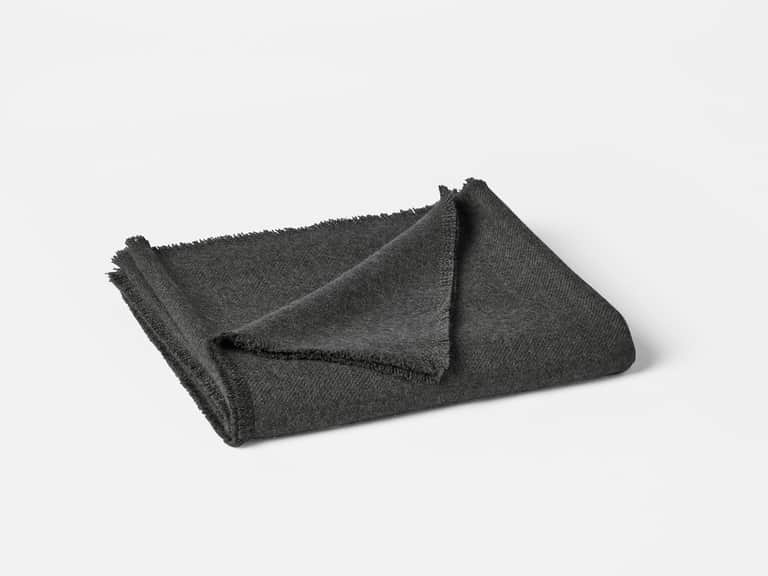
This distinction is especially important when comparing a sleep garment with a loose throw. A throw can be a useful household textile for an adult’s bed or sofa, but it is not automatically suitable as a loose covering in an infant sleep space. Do not assume that natural fibers, a lightweight weave, or a soft handfeel changes the safe-use rules for the item.
Care instructions are part of the decision
Baby textiles face frequent washing, so care directions are not a minor detail. They affect how much effort an item requires and how its texture, shape, and construction may change over time. Before buying or using a garment, confirm whether it can be machine washed, whether it needs a gentle cycle, and how it should be dried.
For a machine-washable organic cotton knit, follow the label rather than relying on a general rule. A product may specify cold water, a gentle cycle, and low-heat tumble drying; another may recommend hand washing or laying flat. Washing at an unsuitable temperature or using an overly vigorous cycle can contribute to shrinking, stretching, pilling, or damage to closures and seams.
Helpful habits include fastening closures before washing, using a laundry bag when the care label permits it, and avoiding overcrowding the machine. Separate items according to color and instructions. Use detergents and laundry products that suit your household, and rinse thoroughly if the garment’s directions call for it. These steps do not guarantee a particular outcome, but they can help caregivers follow the maker’s care plan more consistently.
After washing, check that the item has retained its shape and that all fastenings remain secure. Store clean textiles in a dry place, and make sure garments are fully dry before putting them away. If an item becomes misshapen, develops a damaged seam, or no longer fits as intended, reassess whether it remains appropriate for use.
A practical nursery-textile checklist
When comparing baby textiles, a short checklist can keep the decision grounded in what matters for your family. There is no need to decode every technical term at once. Start with clear product information and work through the essentials one by one.
- Fiber content: Confirm the stated material and whether the item is a blend or a single fiber.
- Certification: Read the exact certification language and identify what it applies to.
- Fabric construction: Consider the knit or weave, texture, weight, and finishing details.
- Fit and size: Use the maker’s sizing guidance and follow the stated age and use instructions.
- Closures and seams: Look for secure, intact construction and practical access for dressing or changes.
- Care: Check washing and drying requirements against your household routine.
- Intended use: Distinguish sleepwear from bedding or decorative textiles, and follow product-specific directions.
- Safety guidance: Consult current recommendations from trusted child-safety authorities and seek professional advice for individual concerns.
This approach can also help prevent a common shopping mistake: choosing a textile solely because one feature sounds reassuring. An organic-fiber claim, a pleasing texture, and an easy closure each offer different information. The strongest decision comes from understanding the full item and whether it suits the intended routine.
Comfort is a combination of details
Choosing organic cotton for a gentler nursery is less about finding a perfect label and more about bringing together thoughtful details. Fiber content gives you a starting point. Certification can clarify standards behind a claim. Knit structure helps explain texture and drape, while closures and fit shape everyday usability. Care instructions reveal what maintenance will ask of you.
For infant sleepwear, that practical review must sit alongside current safe-sleep guidance and the manufacturer’s directions for the specific product. A textile may feel lovely and be thoughtfully made, yet still require careful attention to size, warmth, and intended use. When information is missing or unclear, contact the maker or choose an item with instructions you can confidently follow.
Ultimately, the gentlest nursery is built through informed choices rather than a single material claim. Take a moment to read the label, examine the construction, and consider how the item will be washed and used. Those small checks can make a cozy purchase feel more considered—and make daily routines a little easier for both caregivers and babies.