A guide to materials, texture, and everyday comfort
How Fiber and Weave Shape the Feel of Coyuchi Throws
A throw’s personality comes from more than the fiber printed on its label. The way that fiber is woven or knitted, the fabric’s weight, and the finish at its edges all influence warmth, softness, drape, and the pleasure of reaching for it. Understanding those details makes it easier to choose a throw for a breezy evening, a cool bedroom, or a sofa that invites one more chapter.
When comparing Coyuchi throws and other carefully made home textiles, think of fiber and construction as a team. Wool, alpaca, and blends each have distinctive characteristics, but a loose waffle weave will feel different from a dense woven cloth made with the same material. Here’s how to read those differences—and match a throw to the room and season where it will earn its place.
Start with the moment you want the throw to make better
Before comparing fiber labels, picture how you’ll use the throw. Is it an extra layer at the foot of the bed, a wrap for a chilly reading chair, or something to drape over the sofa for everyday lounging? The answer matters because no one texture is ideal for every setting. A throw meant for a mild evening may be most appealing when it feels light and easy to move, while a layer for a cold room may need more substance and a closer, warmer hand.
Room temperature is only one part of the equation. Consider how often the throw will be handled, whether you want a smooth or highly textured surface, and how much care you are comfortable giving it. A piece that feels wonderful but needs specialized cleaning may suit a quieter bedroom better than a busy family room. On the other hand, a washable textile may be a practical everyday favorite, even if its texture is less plush than a delicate specialty fiber.
It helps to separate three questions that often get blurred together: What is the throw made from? How is it constructed? And how do its weight and finish affect the way it behaves? Each answer adds a useful clue. Together, they tell a more complete story than a fiber name alone.
Fiber first: wool, alpaca, and blends
Wool throws are valued for their natural warmth and resilience. Wool fibers can help create an insulating layer without automatically making a textile feel stiff or heavy. The result varies considerably with the yarn, weave, finishing, and fabric weight. A brushed wool blanket, for example, may feel softer and fuller at the surface than a lightly textured wool throw, even though both are wool.
Wool can be a good choice when you want a dependable layer for a cool room or a sofa that sees regular use. It also comes in a wide range of constructions, from more open textures to compact woven fabrics. That range is a reminder not to treat “wool” as a single tactile experience. Look for construction details and weight alongside the fiber content, and follow the care instructions: some wool throws call for dry cleaning rather than a routine machine wash.
Alpaca throws often appeal to people looking for a soft, light-feeling layer with noticeable warmth. The way alpaca is prepared and woven matters, too. Fine fibers can produce a smooth, gentle surface, while the fabric’s construction influences whether the final piece feels fluid, lofty, or more structured. An alpaca throw that drapes easily across a chair may feel quite unlike a thick, textured blend.
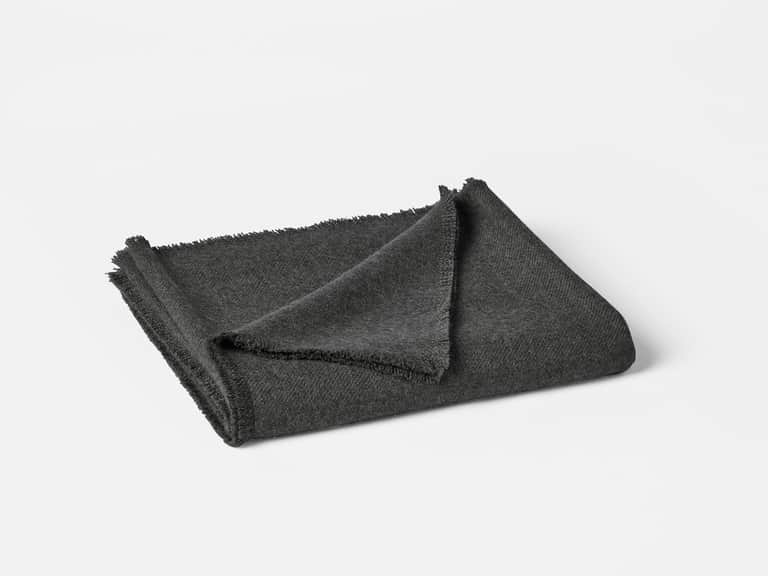
The Pacaya Alpaca Throw offers a clear example of how fiber and construction work together. Made from 100% baby alpaca and woven in Peru, it uses a twill weave that supports softness and drape while providing warmth without a bulky feel. Its blanket-stitched hem provides a finished edge. The throw measures 50 by 70 inches, and its care instructions specify dry cleaning, details worth weighing alongside its appealingly lightweight character.
Blends bring more than one fiber’s qualities into the same textile. A wool-and-alpaca blend, for example, can combine the insulating presence of wool with alpaca’s distinctive softness and texture. The proportions alone don’t tell the whole story: yarn structure, weave, density, and finishing still shape the final hand. For a blend, ask what you want most from the throw—warmth, a pronounced surface, fluid drape, or a combination—and consider whether its care needs suit your routine.
Weave is the quiet design decision you can feel
A weave is the arrangement of yarns in a fabric, and it affects both appearance and performance. Weave can determine how open or compact a textile feels, how much air its structure can hold, and whether it lies flat or gathers into a more dimensional surface. Two throws made from similar fibers may therefore feel surprisingly different in the hands.
Woven construction: composed drape and a finished surface
Woven textiles are formed by crossing yarns in an organized structure. Depending on the weave, a woven throw may feel smooth, crisp, flexible, or substantial. Twill, the construction used for the Pacaya Alpaca Throw, creates a characteristic diagonal structure. In this case, the product details describe a soft drape and insulation without bulk—a useful combination for someone who wants a warm layer that does not feel cumbersome.
Woven throws can be easy to style because they often settle neatly over furniture or a bed. But “woven” does not mean one fixed level of warmth or firmness. Yarn thickness, the spacing between yarns, and finishing all make a difference. If a product description mentions a brushed finish, that detail may signal a softer surface than an unbrushed textile, while a tightly constructed fabric may feel more compact and tailored.
Knit construction: flexibility and visible stitch texture
Knitted fabrics are made from connected loops of yarn. That looped structure often gives a textile more stretch and flexibility than a woven one. It can also create visible stitch patterns, from subtle ribs to pronounced textures. A knit throw may feel invitingly yielding when gathered around the shoulders, though the exact drape depends on the stitch, yarn, and density.
Knits can be especially appealing when you want a relaxed, tactile layer rather than a perfectly flat surface. They may also have a more casual, sweater-like character. The important thing is to inspect the individual construction details instead of assuming every knit is loose or every woven throw is stiff. Stitch size and yarn weight can transform the experience.
Waffle construction: texture with an airy impression
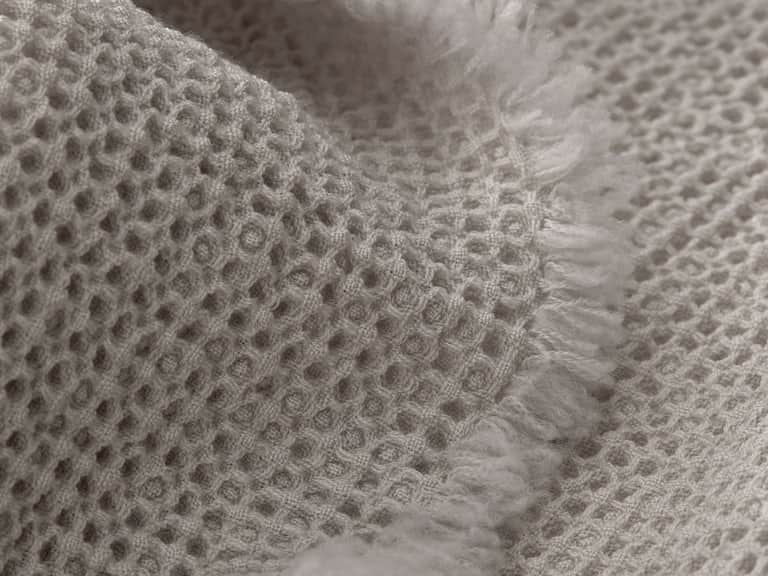
Waffle weaves create a grid-like surface with raised and recessed areas. Those changes in surface give the fabric visual depth and a distinctive tactile quality. The structure can feel springy and textured while still allowing a throw to remain relatively light, depending on its fiber and weight.
The Nid Throw is a 100% wool example. Its waffle construction gives it a pronounced texture and a warm, elastic, slightly puffy feel. At 300 grams per square metre, it is described as a light fabric suitable for milder winter nights. That combination makes it worth considering when you want a wool layer with surface interest but do not necessarily want the feel of a dense, heavy blanket.
Weight, loft, and drape: what the specifications tell you
Weight is one of the most useful details to compare, but it deserves a little interpretation. A weight listed in grams per square metre describes the mass of the fabric over a given area; it does not, by itself, tell you exactly how warm or soft the throw will feel. A textured construction can create a loftier impression, while a smooth fabric of similar weight may sit closer to the body. Fiber, weave, and finishing all contribute.
Loft refers to the sense of fullness or thickness in a textile. A loftier throw may feel cushioned and cozy, but fullness does not always mean greater practical warmth in every situation. The fabric’s structure and how it is used matter. Drape describes how the throw falls over a surface or around a person. A fluid textile tends to fold and cascade; a more substantial one may hold its shape and create a defined edge over a chair or bed.
These qualities can pull in different directions. A lightweight throw may drape beautifully but provide less of the wrapped-up feeling you want in a cold room. A more substantial piece may feel reassuringly warm yet be less convenient to carry from room to room. Decide which trade-off matters most to you, rather than searching for a single specification that promises everything.
For a small reading chair, graceful drape and manageable weight may be more important than maximum coverage. For a bed layer, a broader throw with enough substance to remain in place may feel more useful. On a sofa shared by several people, texture and durability may deserve equal attention. Product dimensions also affect the experience: a throw’s coverage depends on its actual size as well as the way it hangs or wraps.
Blends and surface character: warmth with a point of view
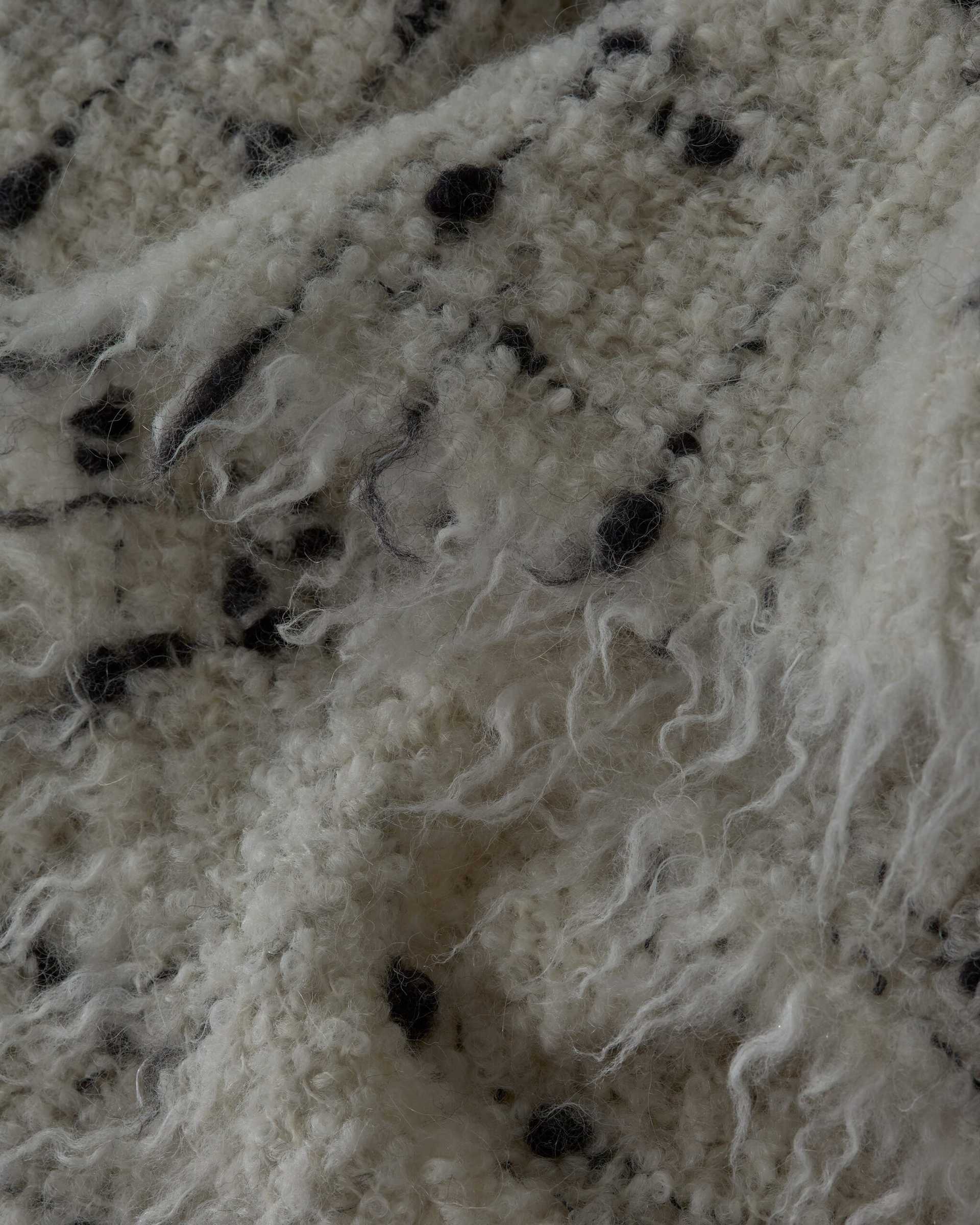
Fiber blends can bring extra visual and tactile character. The Peg Throw, made from 70% alpaca and 30% wool, has a lighter bouclé base with an interwoven black buttoned look and frayed edges. At 310 grams per square metre, its product description emphasizes a full-bodied, textured appearance and warmth for winter use. It is the kind of construction that makes texture part of a room’s atmosphere, not just a detail you notice when you touch it.
That more expressive surface may be right for a sofa or bed that needs an accent with plenty of personality. A smooth, quietly colored textile might be easier to pair with patterned upholstery or busy bedding. Think about the other materials in the room: a strongly textured throw can add contrast to a sleek sofa, while a simple surface can offer a calmer note among patterned cushions.
Finishing details play their own part. Brushing can soften a surface; a stitched hem can provide a neat border; and a fringed or frayed edge changes the visual impression. These details do not replace fiber or construction as indicators of performance, but they do influence how a throw looks and feels in daily use.
Match the throw to the room and season
Choosing a throw becomes simpler when you begin with the environment. A room that tends to stay cool may call for a warmer wool option or a fuller blend. A sunlit sitting room or mild-season bedroom may be better served by a lighter layer that can be lifted, folded, and moved without effort. Neither approach is universally right; comfort depends on the room, the person using the throw, and the way it will be layered.
- For a mild evening: Look for a lighter construction and a hand that feels comfortable over clothing. A light wool waffle weave or an airy alpaca throw may be a useful direction, depending on your preference for texture and care.
- For a cooler bedroom: Consider a more substantial wool textile or a blend that feels full and insulating. Check dimensions if you plan to place it across the foot of a bed or share it while lounging.
- For a sofa or favorite chair: Think about how the throw will drape, how often it will be moved, and whether a textured surface will complement the upholstery.
- For a tactile accent: Waffle, bouclé, and knitted surfaces can add dimension. Pair them with smoother materials if you want contrast without making the whole room feel visually busy.
- For frequent everyday use: Read the care label before deciding. A textile that requires dry cleaning may be a better fit for careful use than for a household where throws are washed often.
Seasonality is useful, but it should not become a strict rule. A light throw can be welcome in a cool, air-conditioned room in summer, while a warm textile may be appreciated on a winter morning even when it is not being used as a bed covering. The best choice is the one that suits your real routine, not an imagined ideal version of it.
Care is part of comfort, too
Care instructions affect how easily a throw fits into daily life. Some fibers and constructions are more sensitive to agitation, heat, or changes in shape. When the label specifies dry cleaning, as it does for the Pacaya Alpaca Throw, treat that as an important part of the ownership picture rather than a footnote. A wool textile may have its own handling instructions, so check the guidance for the particular piece instead of relying on a general rule for all wool.
Between cleanings, thoughtful storage can help keep a throw in good condition. Fold it clean and fully dry, and follow any product-specific recommendations for protecting natural fibers. Avoid assuming that a throw can be washed at home just because it feels sturdy. The construction, finish, and fiber can all affect what care is appropriate.
Ease of care does not have to be the only deciding factor, but it should be an honest one. If a throw will be used every day, a manageable care routine may matter as much as its first impression. If it will mostly serve as a decorative or occasional layer, you may be more comfortable choosing a delicate textile with specialized care needs.
A simple checklist for comparing throws
When two throws both look appealing, compare them in a consistent order. Start with intended use, then move through fiber, construction, weight, dimensions, and care. That sequence helps prevent a beautiful surface or a familiar material name from making the decision for you.
- Name the job. Decide whether the throw is mainly for warmth, decoration, lounging, or a combination.
- Read the full fiber content. Note whether the textile is wool, alpaca, or a blend, and pay attention to the proportions when they are provided.
- Look for construction terms. Woven, twill, knit, waffle, and bouclé describe different structures and surface qualities.
- Compare weight and size. Use these details as practical clues, while remembering that weight alone does not determine warmth.
- Consider the finish. Brushing, stitched hems, and textured or fringed edges affect both touch and appearance.
- Check care requirements. Choose a maintenance routine you can realistically follow.
- Imagine it in your room. Think about how the color, texture, and drape will work with existing furniture and textiles.
The best throw is the one you reach for
There is no universal winner among wool, alpaca, and blended throws. Wool can offer a dependable sense of warmth and structure; alpaca can deliver a soft, light-feeling layer; and blends can bring together different fibers with a distinct surface character. Weave then adds another dimension, whether that means the composed drape of twill, the flexibility of knit, or the raised texture of waffle construction.
For a lightweight layer with a fluid feel, a twill-woven alpaca throw such as the Pacaya presents one set of qualities. For textured wool in a lighter construction, the waffle-woven Nid offers another. For a fuller, more visually expressive blend, Peg brings together alpaca, wool, bouclé texture, and distinctive finishing. These are not interchangeable experiences—and that is precisely the point. Comparing their details helps clarify which one fits your room, habits, and sense of comfort.
Ultimately, a throw is both a practical textile and a small invitation to slow down. Pay attention to the fiber, notice the weave, and be realistic about warmth and care. When those choices align with how you live, the result is more than a pleasing accent: it is the layer you instinctively reach for when the evening turns cool.